Tell Lawmakers to Invest in Access to Home

Our Homes, Not Nursing Homes

Free Our People!

Inaccessible housing is one of the biggest barriers for people who want to live in the community.

Unfortunately, the home modification program, Access To Home, is severely underfunded at only $1 million. This has left many parts of the state unserved, and has resulted in years long waiting lists. The Senate and Assembly need to hear from the disability community that they must address the need for home modifications!

As the State invests in programs such as Open Doors and the Olmstead Housing subsidy, which help people leave institutions or prevent unwanted and unnecessary institutionalization, it needs to provide funding for home modifications.

CIDNY is urging the legislature to include $10 million in funding for Access To Home. It helps homeowners and renters get the home modifications they need to live in the community. The Senate and Assembly are finalizing their one house budget responses, which are due out next week. We need everyone to make 4 calls today to help ensure we get this necessary funding included!

ACTION: Make the following 4 phone calls today to help ensure we have funding for Access To Home!

  • Call Senate Housing Chair, Senator Betty Little at 518-455-2811
  • Call Senate Majority Leader, Senator John J. Flanagan at 518-455-2071
  • Call Assembly Housing Chair, Assemblyman Steven Cymbrowitz at 518-455-5214
  • Call Assembly Speaker, Assemblyman Carl Heastie at 518-455-3791

Say: “I am disabled / a family member of someone with a disability and I need help making my home more accessible. There is no available funding to get this help, and without it, I can’t leave my house/leave a nursing facility. Please help me stay in my home by including $10 million for Access To Home in your one house budget response so it is available in my area and to people across New York State.”


H/T New York Association on Independent Living

Call Today For Increased Funding for Independent Living Centers!

Independent Living Centers like CIDNY provide people with disabilities and their families the supports and services that help them live independently and integrated in their communities. ILCs rely on the State for funding to provide these vital services, but New York State has failed to adequately fund centers for well over a decade, leaving us struggling to continue providing services. 

The State Education Department and Board of Regents recommended a $5 million increase for ILCs for the second year in a row. Unfortunately, Governor Cuomo’s proposed Executive Budget failed to give centers this additional funding they need to meet the needs of their communities. But it isn’t too late to get an increase in this year’s budget!

The next step is the legislature. The Senate and Assembly will release their one house budget responses in mid-March. There were budget sign-on letters in support of an increase in funding for Independent Living Centers in both houses with strong support.  Now we need to put pressure on the Senate and Assembly’s leadership and Education Committee Chairs to include this $5 million increase for Independent Living Centers!
 
ACTION: Make the following four phone calls today to help ensure Independent Living Centers receive a vital funding increase in this year’s budget!

  1. Call the Assembly’s Education Chair, Catherine Nolan at 518-455-4851
  2. Call Assembly Speaker Carl Heastie at 518-455-3791
  3. Call the Senate’s Education Chair, Carl L. Marcellino at 518-455-2390
  4. Call Senate Majority Leader John J. Flanagan at 518-455-2071

Say: Help Independent Living Centers and the people with disabilities they serve by providing ILCs with a crucial funding increase of $5 million in the one house budget.”
 
Below are some additional talking points. Feel free to customize based on your personal experience.

Talking Points:

  • Independent Living Centers have gone well over a decade with level funding, which is why this modest increase of only $5 million is so crucial.
  • Independent Living Centers save the State money! Every $1 invested in ILCs saves the State $9 thanks to their work helping people leave nursing facilities and other institutions.
  • This additional funding will help centers to cover the increased costs of providing services and prevent them from program cutbacks and staff layoffs.
  • This additional funding will ensure they can meet the needs of their local communities across the State.

Learn more about the federal impact on ILC funding here.

Show Love for People with Disabilities: No on HR 620

This Valentine’s Day, show some love for people with disabilities by speaking out against HR 620. 

Please take a moment to call and tweet our Representatives TODAY and TOMORROW. Urge them to vote NO on HR 620, a bill that would turn back the clock on the Americans with Disabilities Act.

It is especially important to call Long Island Democrat Kathleen Rice (NY-4) because she’s a cosponsor of the bill.

All Reps can be reached at the Capitol Switchboard: (202) 224-3121 or (202) 224-3091 (tty). Direct office contact information can be found at Contacting Congress.

Can’t call? You can also text RESIST to 50409 or contact elected officials online.

Learn more about the bill here.

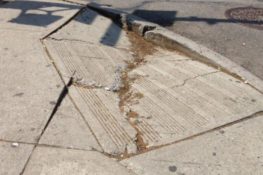
Report on City Curb Cuts Agrees with Disability Community Concerns

People with disabilities who have trouble using New York City sidewalks and curb cuts have a reason for hope.
 
A Special Master, someone appointed by a judge to make recommendations, looked at a proposed settlement on curb cuts. He is a national expert on the Americans with Disabilities Act and disability rights. It is now up to Judge Daniels to accept all or some of the Special Master’s twelve recommendations.
 
The Special Master agrees with our arguments and concerns. We are pleased that our advocacy and statements made by people with disabilities made a difference.
 
In 2014, CIDNY staff and volunteers surveyed 1066 curbs in lower Manhattan. We showed the horrible conditions of the City’s curb cuts. At the same time, a settlement negotiated with the City by United Spinal was being reviewed. Judge Daniels agreed that other groups representing people with disabilities could weigh in on the new proposal.
 
CIDNY, with other coalition partners and individuals with disabilities represented by Disability Rights Advocates and Cravath Swaine & Moore LLP, told the court that the new proposal didn’t work for all people with disabilities. We told the Judge that the proposal did not require the City to follow the Americans with Disabilities Act (ADA). It did not include the needs of people who are blind. It did not give the City deadlines, a monitoring process, or ensure that curb cuts would be fixed to meet requirements of the ADA in the next 20 years.
 
Advocates from CIDNY and our coalition partners shared their experiences trying to use City streets. People who use wheelchairs or who are blind told the Judge about having to get off the sidewalks and into traffic because of missing or bad curb cuts. They told the Judge about ending up in the middle of an intersection when curb cuts didn’t have raised bumps that let them know they are leaving the sidewalk. People also told of tripping or having their wheelchairs tip over because of bad curb cuts.
 
Testimony by New Yorkers with disabilities helped the court and the Special Master understand the need for a better settlement on curb cuts.
 
You can help us continue to make a difference. We work on a lot of issues that affect people with disabilities. These include health coverage, transportation, housing, education, and employment. To find out more or to get involved, contact Monica Bartley (mbartley@cidny.org). Monica can connect you with our CIDNY Action Network. She can help you get involved in specific advocacy activities or learn more about what we’re doing. Your voice can be heard.